

The camera eats first
How Instagram competence is replacing event expertise

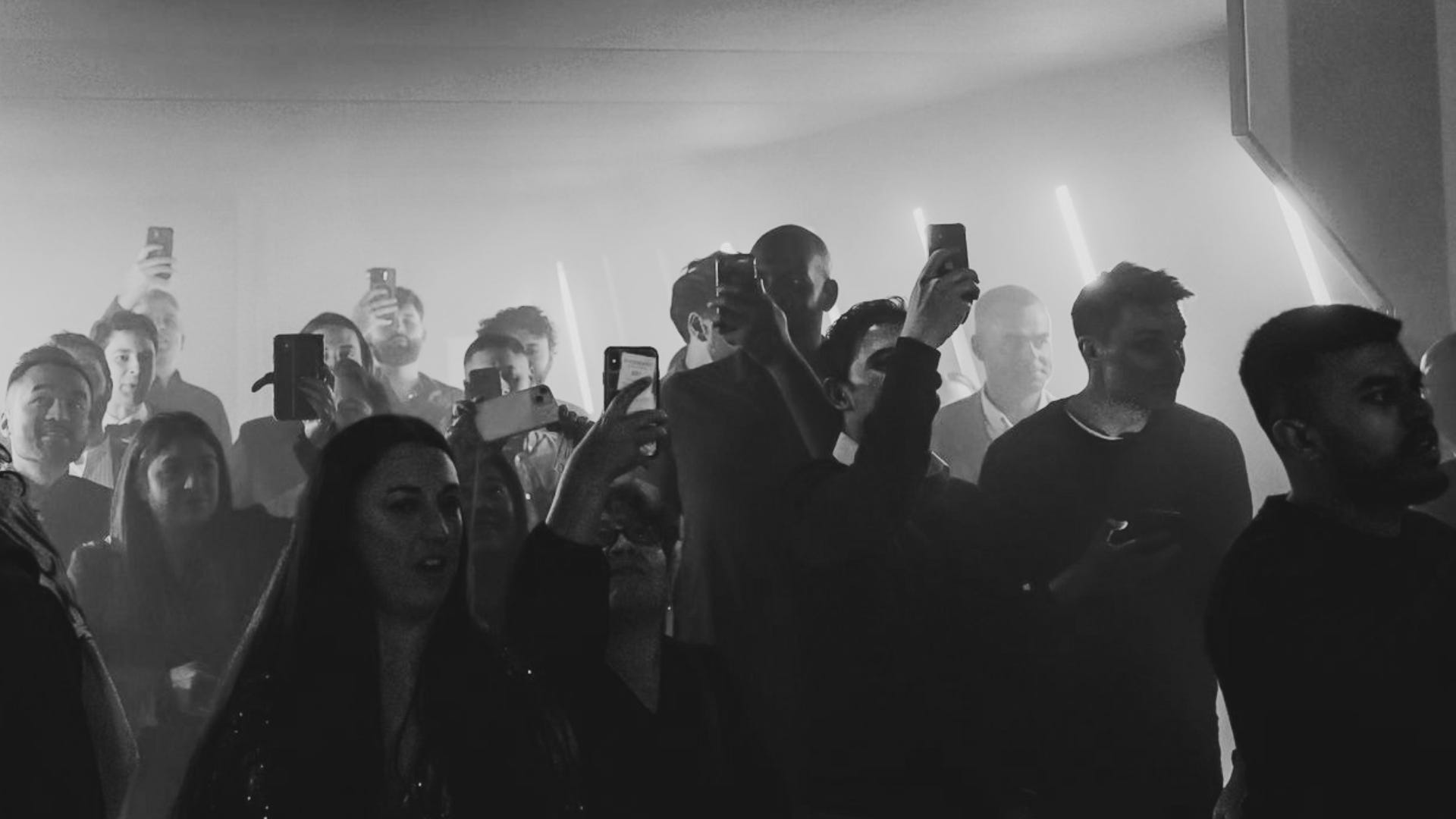
Welcome to event planning in 2025, where Instagram1 fluency is quietly overtaking actual competence as the primary measure of success. We’re witnessing a fundamental reordering of priorities that is reshaping how events are conceived, executed and valued.
Events are no longer designed solely for those present in the room and are now staged equally for a secondary audience of those scrolling at home. This shift may have been inevitable but its implications for the craft and credibility of event planning are only now becoming clear, and they are more profound than we have yet acknowledged.
Rules of engagement
The mechanics of how event planners build successful businesses have been entirely inverted.
Reputation was once cultivated through word-of-mouth referrals, repeat clients and industry relationships built over years of consistent execution. Now it increasingly derives from follower counts, viral moments and the ability to produce an endless stream of visual content.
Couples planning weddings navigate Instagram feeds, not preferred supplier lists. The proliferation of content creators in addition to, and increasingly in place of, photographers at weddings, crystallises this transformation. Brides don’t want to wait three months for their wedding album; they want reels ready for posting the next day.
Event planners are adapting by becoming content creators themselves, feeling the mounting pressure to generate a continuous flow of behind-the-scenes footage, inspo visuals, styled shoots and process videos.
This evolution has established an entirely new metric system against which success is calculated. Traditionally, planners measured their worth through client satisfaction, repeat business, industry reputation and so on — metrics that, at least roughly, correspond to actual professional competence. Now, under these new rules, success is increasingly measured through content performance.
The most successful planners will be those who understand not only how to orchestrate an event, but how to reshape it into shareable content.
A skills inversion
We are living in a total inversion of expertise. It’s a phenomenon that extends beyond event planning but our industry is a textbook example. Planners fluent in algorithms, the cadence of content creation and grammar of online storytelling are rising to the top. Meanwhile, those who have mastered the actual craft of event design, planning, and execution but lack content fluency are being edged to the margins.
The issue here is that these are two entirely different skill sets operating on principles that not only have little in common but are often directly at odds.
Instagram thrives on manufactured spikes of attention, peak moments and scroll-stopping aesthetics driven by an algorithm that rewards brevity, drama and arresting visual impact. Events, by contrast, succeed in continuity. Great events emerge slowly and organically over time, with energy that breathes naturally in the crucial white space between bigger moments.
The most memorable events are rarely defined by individual moments of Instagram-worthy climax, but by the accumulation of small perfections.
It’s the seamless flow of service, the imperceptible building of atmosphere and the sum of a thousand invisible decisions that create conditions where meaningful connection or celebration can occur.
The market, however, is increasingly rewarding planners who understand the former whilst devaluing those who may be more skilled in the latter. The consequence is that events are now littered with content checkpoints or staged moments of artificial intensity, designed less for guests than for the lens.
Some planners now spend significant amounts of time on-site during events, unfocused on logistics or guest experience, instead capturing content for their own channels. They have learned to view events through two competing lenses:
What enhances genuine connection or celebration in the room
What will generate compelling content for their presence online
Increasingly, it’s the second lens takes precedence as the metrics it feeds (view, followers, leads) long outlive the event itself.
The irony is as stark as it is inevitable. The more events are engineered to look exceptional online, the less exceptional they will feel to those actually attending.
The very experiences that these events planners are showcasing as content are diminished by the sheer imperative to present them as content in the first place.
Content distorts craft
When content creation becomes the primary driver of event design, every element of traditional event craft is warped beyond recognition. Everything we once worked towards in service of an event’s guests is reconfigured to serve a secondary audience that’ll never set foot in the room but whose approval is now treated as more valuable.
Venues are selected not with guest experience as the primary consideration but for their inherent aesthetic impact. Beautiful, historical venues are chosen to host events despite acoustics so poor that guests can barely talk to one another. Floor plans are drawn for symmetry when viewed from an impressive aerial drone shot, rather than for the guest’s lateral perspective in the room.
Photo opps now dictate the design process, regardless of what operational bottlenecks they may create. Floral arrangements grow increasingly elaborate, creating stunning tablescapes that make across-the-table conversation impossible. Even the choreography of catering service is now influenced by the aesthetic considerations with model waitstaff hired not for their attention to detail or ability to attend to guests’ needs but for their scroll-stopping looks.
This constitutes a total redefinition of what events are meant to accomplish:
Guest-focused event design understands space as a carefully orchestrated environment for human interaction
Content-focused event design reduces space to vignettes optimised for visual extraction over the actual experience of being present within it
What we must protect, and perhaps what’s most at risk, are what we might call the unfilmable qualities of great events. Whether it’s the ambient temperature of a room that keeps guests comfortable or preserving sight lines such that everyone can see a speech take place; these are essential elements that resist documentation but create the conditions within which genuine connection and celebration can occur.
These qualities require expertise and experience to conceive and execute. Even though they exist to serve guests’ actual experience, they are invisible to the camera and are therefore deemed irrelevant to content performance metrics.
If we focus only on what can be documented online, we risk losing sight of what actually underpins great events in the first place.
Professional dilemma
It would be dishonest to outright condemn this transformation without acknowledging both the genuine dilemma at its core and the legitimate value it has created. Event planners are not driving this change so much as adapting to a new economy of attention, and in many aspects, social media has solved problems the industry had long struggled with.
The case for a visual portfolio is undeniable. Event planning is an industry built on trust in the intangible. Clients routinely hand over substantial sums for a product that exists largely in the planner’s imagination until the moment the event actually takes place. Social media provides an effective and free platform that allows planners to demonstrate their competence rather than merely describe it. When a planner can show a prospective client what to expect, rather than just tell them, they bridge a key gap in communication.
Instagram has democratised access in ways that benefit both planners and clients.
A talented planner without connections, experience, or indeed, a marketing budget, can now assemble a portfolio that competes with established names. Clients, in turn, can discover planners whose aesthetic aligns with their vision, regardless of geography or traditional referral networks. The platform, for all its distortions, does reward genuine creativity and taste.
And yet, it is precisely because of these legitimate uses that the distortions are so insidious. If clients are hiring planners on the basis of Instagram presence and explicitly demand “Instagrammable” events, content creation transforms from an optional marketing activity into a core professional competency.
What was once additional to the craft is now central to it.
For corporate and brand events, the importance placed on content creation represents an intensification of existing priorities rather than a disruption of the status quo. These events have always been designed to communicate beyond those physically present and the shift towards content-focused design in these contexts should be considered as evolutionary, not revolutionary.
Private events present a more nuanced challenge to professional integrity. When a couple books a content creator for their wedding, or more broadly, sets out to design their celebration as fit for social media consumption, they are making conscious decisions about how they want to experience one of the most important days of their life. This leaves planners at risk of delivering exactly what was requested by the client and, at the same time, neglecting the fundamentals of what actually makes a great wedding.
Are we witnessing a natural evolution of client needs we should simply meet at all costs?
Or, are we seeing the systematic erosion of actual competence in favour of new skills that may suit the zeitgeist but have little relationship to the quality of our service?
The question at the heart of it all is:
Do we want content creators who plan events, or event planners who create content?
The lines are already blurred. There are planners today who understand algorithms better than event logistics, who know how to create viral moments but struggle to produce an event that feels organised or well-executed. Yet they succeed in the market because they’re answering to a measure of success that clients think they want, even when those measures don’t correlate with our understanding of what makes a great event.
Reclaiming the craft
The industry stands at an inflection point, facing a choice between two distinct futures. We can continue on the trajectory of optimising events for the feed and produce a generation of content creators who happen to plan events. Or we can use this as a moment of clarity to reassess and articulate what makes an event genuinely worth attending, ensuring those essential qualities are preserved and prioritised even as we adapt to this new technological and cultural reality.
The solution is obviously not a blanket rejection of social media and content creation— now permanent features of a landscape that successful planners must navigate skilfully. Instead, we have to insist that content creation serves our craft rather than replaces it.
This requires an honest conversation about what we’re aiming for. Rather than measuring success only through content performance, we’d do well to develop more sophisticated methods of evaluating our events’ immediate impact and lasting value that transcends social media engagement. An event that generates viral content but leaves guests feeling underwhelmed, disconnected or, at worst, manipulated, has clearly failed, regardless of its online success.
For clients, this transformation demands a more nuanced understanding of what it is they are actually asking planners to accomplish. A planner's Instagram grid and follower count may reveal aesthetic sensibility and marketing nous, but that bears no relationship to their their ability to manage complex logistics, navigate real-time crises or perhaps most importantly, create the environmental conditions that allow a memorable event to take place.
The most successful planners in this evolving landscape will be those who recognise that the most compelling content emerges from genuine experience, not the reverse.
They’ll create events that exist fully in the room first and translate to the feed second, because authentic experience remains the most compelling content of all.
The camera may eat first, but if it devours the entire feast, what remains for guests to consume? The industry's challenge, and opportunity, lies in learning to nourish both appetites without starving either one. Planners who master this balance will not only survive the current transformation but define the profession’s future, proving that the most shareable moments come from events worth sharing, not designed for sharing.
Ultimately, success, however measured, should be whether guests leave an event feeling that they’ve experienced something meaningful. Content will follow naturally from that foundation, but only if we remember to build it first.
Instagram serves as shorthand throughout this piece for the broader social media ecosystem. I'm a millennial who still calls everything "Instagramming" so please mentally substitute your platform of choice throughout.